Overview
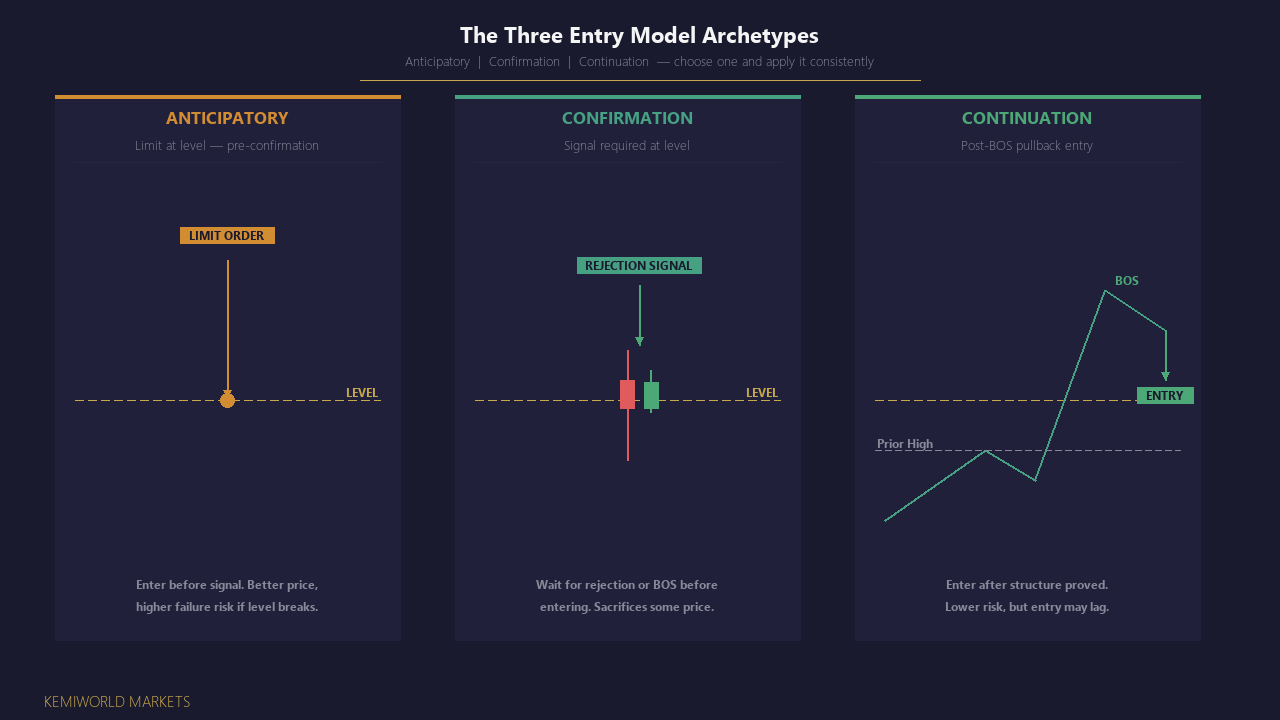
Knowing what to trade is not enough. You need to know exactly when and how to enter. This course covers the practical mechanics of translating structural analysis into precise, disciplined trade execution. You will learn the difference between anticipatory and confirmation-based entries, how to use session timing to improve execution quality, the rules for sizing and placing a stop before you touch the entry button, and the discipline principles that separate consistent executors from impulsive ones. This is not a signals course. It is a process course. The output is a repeatable, rules-based execution framework that works regardless of the specific setup you are trading.
What You Will Learn
- ✓ 1. Describe the difference between limit, stop, and market entries and when each is appropriate
- ✓ 2. Apply a confirmation-based entry model using structural triggers (BOS, rejection candle, close beyond level)
- ✓ 3. Explain why session timing affects execution quality and how to use it
- ✓ 4. Define and apply the no-chase rule with a specific numeric trigger threshold
- ✓ 5. Place a structurally valid stop-loss before calculating position size
- ✓ 6. Identify the three most common execution errors and explain how to prevent them
- ✓ 7. Describe the conditions under which a valid setup should be skipped entirely
- ✓ 8. Apply a pre-entry checklist to evaluate setup quality before execution
Who This Is For
Who This Is Not For
After This Course, You Will Be Able To
- ✓ Read market structure across timeframes — identify trends, ranges, BOS and CHOCH
- ✓ Identify high-probability zones and define clear invalidation points before entering
- ✓ Apply strict risk-per-trade rules — calculate position size from account equity, not guesswork
- ✓ Build a repeatable, rules-based trading process with a journal and weekly review
- ✓ Understand how XAUUSD behaves structurally and what drives gold price
This course is designed to give you a working foundation, not just theory. The concepts here are the ones professional traders use — without the shortcuts that create bad habits.
If you're new, start here
- → Begin with Module 1 — it sets the foundation for everything else
- → Do not skip ahead. Each module assumes you understood the previous one
- → Use the "Try This" exercises — they are where real learning happens
- → Focus on understanding, not speed. Depth matters more than pace
Most traders struggle with structure at first. Progress comes from repetition, not speed.
Course Content
5 modules · 16 lessonsStrategies You Can Now Apply
After completing this course, you have the foundation for these strategy frameworks:
Position sizing, drawdown management, expectancy, and capital growth.
Course 4 of 7 · Intermediate track
Continue to Next Course →New insights and breakdowns are added regularly. To keep learning between sessions:
Something unclear in the course? Use the contact form and tell us what confused you.
Entry Models and Execution
5 modules · 16 lessons · Free.
Course 3 of 7 in the academy.
Get notified when new lessons and strategy frameworks are published.