L1.3 — The Rejection Candle: Your Confirmation Trigger
The rejection candle is the most widely applicable confirmation trigger in structure-based trading. It consists of a candle that moves into a zone, shows a long wick into the zone, and closes back outside it — signalling that price tested the level and was rejected. For a bullish rejection at a support zone, this looks like a candle with a long lower wick and a body that closes near the top of its range.
The signal is not the candle itself — it is what the candle represents: sufficient selling pressure to push price into the zone, followed by buying pressure strong enough to close the candle back above the zone. This is a visible footprint of demand at the level. It does not guarantee continuation, but it is a higher-quality trigger than simply placing a limit and hoping.
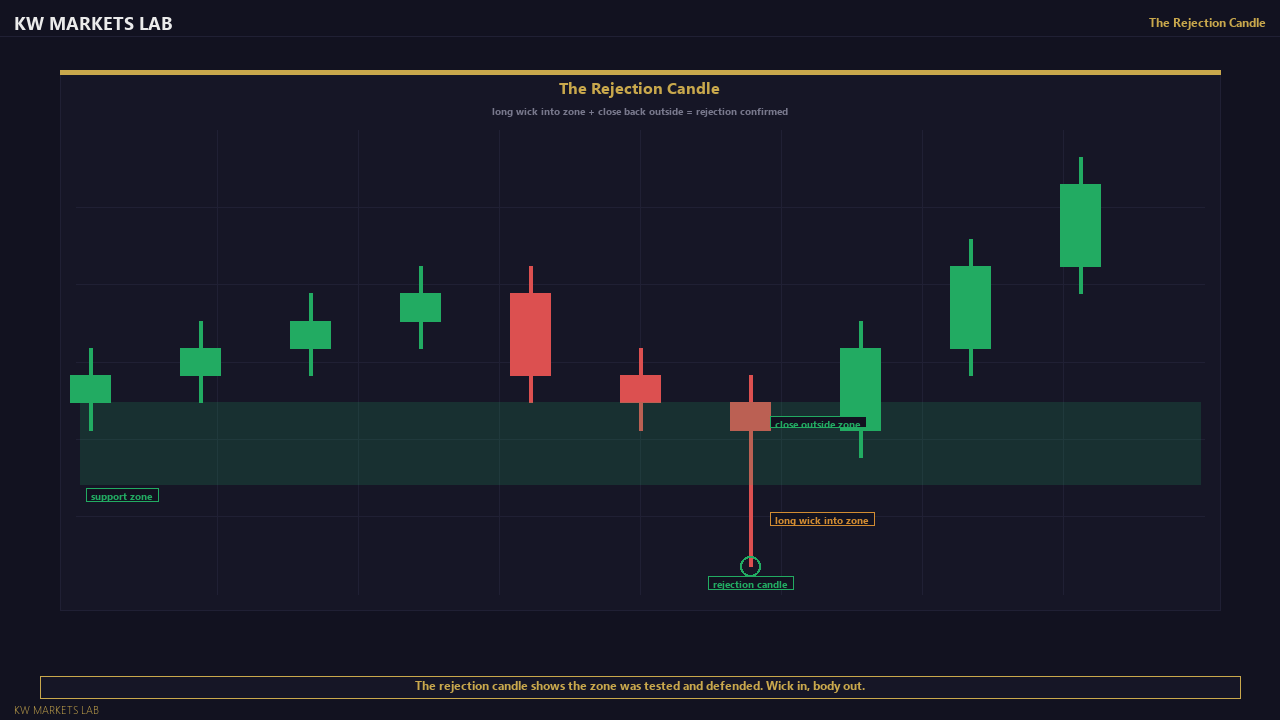
The quality filters for a rejection candle: (1) the wick penetrates meaningfully into the zone rather than just grazing it, (2) the body closes at or above the zone boundary, and (3) the candle is visible — not a tiny doji in a slow session. A rejection candle that meets these three criteria on an H1 or H4 chart at a confluence zone is one of the highest-quality entry signals available in price action trading.
Get notified when new lessons and content are published.