L5.2 — Common Execution Errors and How to Prevent Them
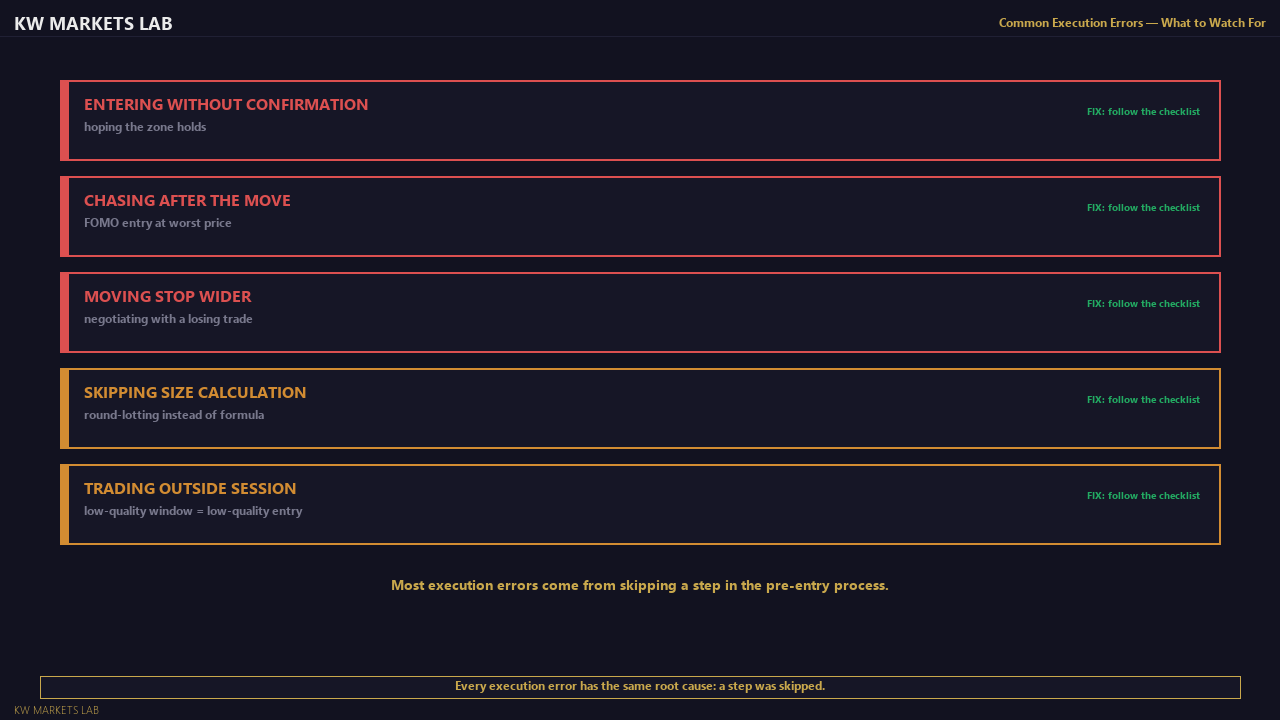
The three most common execution errors are: (1) chasing — entering after the optimal price has moved away; (2) premature stop movement — tightening the stop before structure warrants it, getting stopped out of a valid trade; (3) target abandonment — closing the trade early because of anxiety about giving back profits. Each error has a defined cost in expectancy over a sample of trades.
Prevention requires making each rule explicit and reviewing violations in your journal. You cannot prevent errors you have not identified. For each error: write the rule that prevents it, write the emotion that triggers the violation, and track the frequency over time. Reduction in execution error frequency is a measurable improvement in trading performance that does not require the market to change.
The most underused tool for reducing execution errors is the trade journal entry written immediately after the trade closes — not at the end of the week. The closer the review is to the execution, the more honest and useful the assessment will be. Build this habit and your execution quality will improve independently of your structural analysis.
Get notified when new lessons and content are published.