L3.1 — What a Useful Trade Journal Looks Like
A useful trade journal contains: pre-trade notes (setup rationale, structural basis, confirmation signal, stop and target levels, emotional state at time of entry), post-trade notes (what happened, how the management rules were applied, what the actual exit was and why, and a process compliance rating 1-10), and a summary field linking the trade to a setup type for categorisation.
The journal does not need to be beautiful. It needs to be consistent. A plain text file, a spreadsheet, or a dedicated trading journal app are all acceptable formats. The medium matters far less than the consistency of the practice. One line per trade is not enough — the value is in the reasoning, not the outcome number.
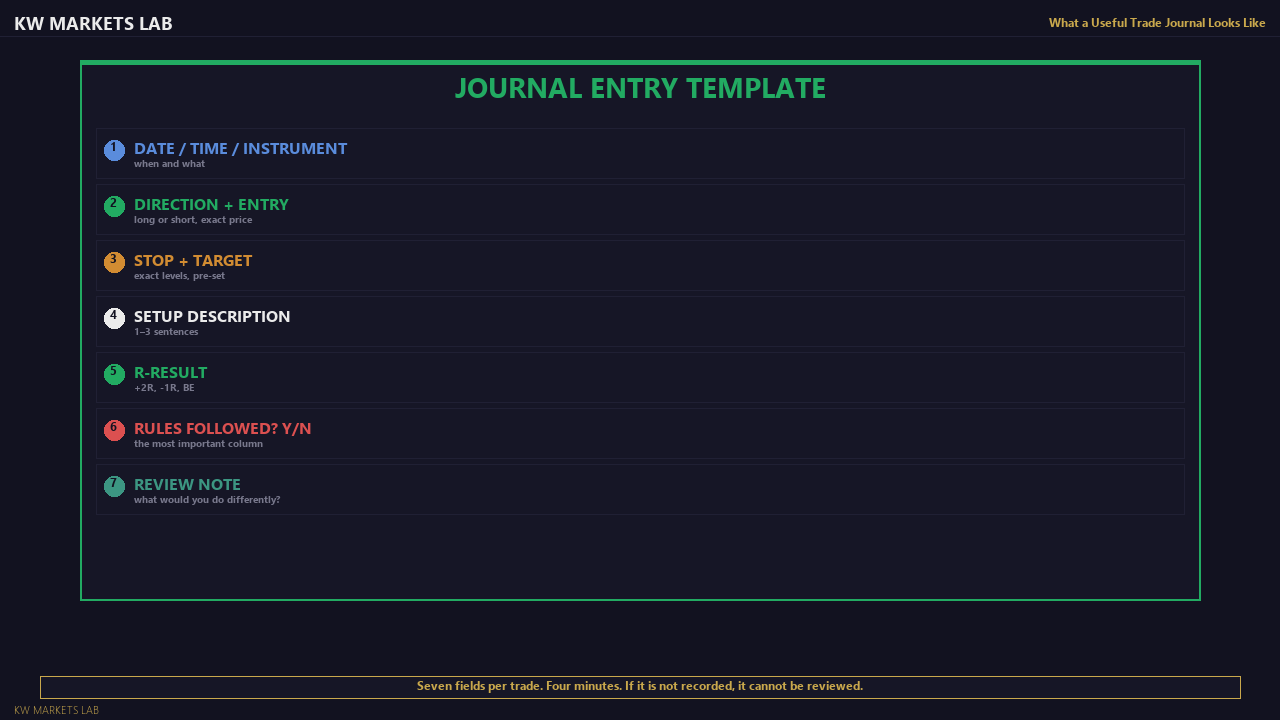
The single most useful field in a journal entry is the one that separates process compliance from outcome: "Did I follow my rules?" A yes/no answer to this question, logged consistently, allows you to calculate your process compliance rate — the percentage of trades where your execution matched your rules. Improving this number is a legitimate and measurable performance goal.
Get notified when new lessons and content are published.